
Researchers at MIT World Peace University (MIT-WPU) Pune have developed a new protective enclosure for industrial abrasive saw machines. This innovative technology significantly reduces noise levels by up to 20 dB(A) while also containing sparks, dust, and flying debris, enhancing worker safety and welfare.

IIM Indore will conduct a study on teenage cricket sensation Vaibhav Sooryavanshi to understand the impact of early fame and pressure on child prodigies.
A one-day patent workshop was held at CSIR-NIIST to promote intellectual property awareness and equip researchers and startups with essential knowledge in patent filing and innovation.
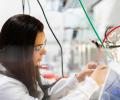
The Sports Authority of India (SAI), in collaboration with the Indian Council of Medical Research (ICMR), conducted a workshop on Good Clinical Practice (GCP) to strengthen ethical sports science research.
The University of Liverpool and the Indian Institute of Science (IISc) have established a joint seed fund to promote research and innovation collaborations in areas such as AI, biomedicine, quantum technology, and space.
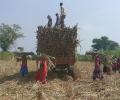
A supervisor at a sugarcane research institute in Shahjahanpur, Uttar Pradesh, has alleged that he was abducted and assaulted by a group of men due to a family dispute. Police have registered an FIR and are investigating the incident after a video surfaced on social media.
CSIR Director General N Kalaiselvi emphasised the importance of research and applied sciences in developing sustainable solutions for India's energy security and environmental challenges at an international conference on Sustainability Through Fundamental and Applied Sciences (STFAS), 2026.

A 30-year-old PhD student in Pune allegedly committed suicide, prompting the arrest of her research guide for alleged harassment. The student left a note accusing the guide of inappropriate behaviour.
A major US study has assessed the reproducibility of research papers in the social sciences, revealing insights into the credibility of findings and highlighting challenges in replicating results.

A new series of research papers in The British Medical Journal reveals that global progress in reducing preventable deaths among newborn babies and children has slowed substantially since 2015, with an estimated 4.9 million children dying before age five in 2024, including 2.3 million neonatal deaths.

IIT Bhubaneswar researchers have developed 'ArsenSafe', a portable, low-cost device for rapid, on-site detection of arsenic in drinking water. This innovation aims to address the critical public health challenge of arsenic contamination in groundwater, offering a solution that doesn't require laboratory infrastructure.
The National Dope Testing Laboratory (NDTL) and Shree Guru Govind Singh Tricentenary (SGT) University have signed an MoU to promote clean sport through joint research, knowledge exchange, and capacity building. This partnership aims to advance scientific research in anti-doping, forensic analysis, and healthcare diagnostics, while also shaping the next generation of professionals in these fields.

Dr Subhash Kashyap not only enhanced Parliament's image in India and abroad, but also the position of Lok Sabha secretary-general which succeeding secretary-generals have upheld thorough neutrality, objectivity and high degree of professionalism, notes Rup Narayan Das.

'Our research demonstrates the potential of perovskite-based semiconductor technologies for next-generation solar cells and memory devices.'
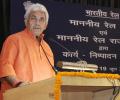
Jammu and Kashmir LG Manoj Sinha addressed the 'IMMUNOCON-2026' conference, stressing the importance of translating scientific immunological knowledge into public health action. He urged scientists to focus on precision medicine, immuno-AI fusion, climate immunity, and accelerating translational research to combat infectious diseases and enhance healthcare delivery.
BIT Mesra has launched 'HimClimX', an AI-powered platform designed for Himalayan climate intelligence and visualisation. It integrates over a century of climate data to offer trend analysis, anomaly detection, spatial visualisation, impact assessment, and AI-driven forecasting for the Himalayan region.

'Now that NCERT has received the status of a deemed university, it will start its own MA courses, postgraduate courses, and doctoral research in education, fully funded by the government.'

A three-day conference, "Dharma in the Digital Age 2026," is taking place at the University of Houston, bringing together scholars and scientists to discuss how ancient Dharmic principles can address contemporary ethical, technological, and societal challenges, including AI, digital governance, and sustainability.

Indian equity benchmark indices Sensex and Nifty closed lower on Thursday, driven by escalating tensions between the US and Iran, persistent foreign fund outflows, and concerns over rising US inflation.

The Defence Research and Development Organisation (DRDO) and the Indian Air Force (IAF) have successfully conducted flight tests of the RudraM-II air-to-surface missile, marking a significant milestone in indigenous defence technology.
Scientists from Agharkar Research Institute (ARI), Pune, have developed a biodegradable nanocarrier platform for targeted gene therapy in breast cancer. This strategy uses mesoporous silica nanoparticles to deliver siRNA molecules, effectively inhibiting tumour growth and reducing off-target effects, offering a promising new approach to cancer treatment.

Researchers at IIT have developed a novel and cost-effective method for tracking surgical instruments in 3D using standard 2D video, potentially improving the precision and accessibility of minimally invasive surgeries.

Teen cybersecurity researcher alleges unauthorised access to nearly 1.8 lakh result records and 1.87 lakh admit card PDFs; institute says data was read-only and issue is being fixed.

A lesson for India is to clearly define objectives beforehand, so that the adversary or other parties do not attempt to mitigate them midway.
A woman claiming to be an author has alleged she was attacked by a mob in Indore while researching the Shah Bano case, but police deny the mob assault, stating the dispute was over a book contract.

'The position of Karachi depicted at that time and the intense rivalry among the factional overlords in Lyari is very close to reality.'
Jammu and Kashmir LG Manoj Sinha emphasised the critical need to translate scientific immunological knowledge into public health action. Speaking at the IMMUNOCON-2026 conference, he highlighted immunology's evolving role in healthcare, stressing continuous innovation and collaboration in areas like immuno-AI fusion, climate immunity, and translational medicine to combat infectious diseases and prepare for future global health threats.

India is increasingly focusing on long-range weapons capable of reaching targets across China.

Analysts predict that developments in West Asia, their impact on crude oil prices, and the trading activity of foreign institutional investors (FIIs) will be crucial factors influencing the Indian stock market this week.

Landfill sites are filling up faster than ever, raising concerns about where all our waste will go in the future. India alone produces more than 150,000 to 170,000 tonnes of household waste every day, with each person generating roughly 0.3 to 0.6 kilograms of rubbish daily, depending on the area and lifestyle, as per PIB.

A new study indicates that India's monsoon season could experience a significant increase in uncompensable heat stress under a 2 degrees Celsius global warming scenario, extending the duration of extreme heat conditions.
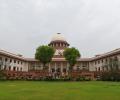
The draft regulations for use of AI in courts 'shall apply to the use, deployment, or integration of AI in any judicial, adjudicatory or administrative function of the Supreme Court of India, high courts, and all courts including the Tribunals and statutory Commissions performing adjudicatory functions, within the territory of India'.

A new study has identified two distinct subtypes of autism, one with increased communication associated with immune-related systems and another with reduced connectivity linked to synaptic pathways. The findings, published in Nature Neuroscience, pave the way for more precise and personalised autism care and support.
Specialty chemicals maker Anupam Rasayan India Ltd has become the first company globally to commercialise Ethyl trifluoroacetate (ETFA) production using its proprietary continuous flow chemistry platform. This innovative technology offers significant advantages over traditional methods, and ETFA is a crucial component for pharmaceuticals, life sciences, and performance materials, with a global market estimated at USD 500-600 million.

The smiling axolotl is everywhere at the World Cup in Mexico City. But behind the colorful murals and mascot statues lies a troubling reality: scientists say the critically endangered amphibian is becoming increasingly difficult to find in the wild.

From Mexico to Canada, across 16 stadiums in wildly different climates, the continental tournament is putting turf science to its ultimate test. The goal: creating living surfaces that can withstand kicks, studs, tackles and scorching summer heat.

CJP, launched last month, has rapidly gained social media traction among students and young people focusing on youth and education issues
Indian paint majors, including Asian Paints, Berger Paints, and Kansai Nerolac, reported better-than-expected performance in Q4FY26, driven by steady demand, improved product mix, and strategic price hikes. The sector is also benefiting from reduced competitive intensity as new players also increase prices, narrowing the gap with incumbents.

Leader of Opposition Ritabrata Banerjee claims 64 dissident TMC MLAs have submitted their names to the Speaker, constituting over two-thirds of the party's Assembly strength, and has called for a floor test to verify their claims of support amidst a widening split within the Trinamool Congress.

The Delhi government's Women and Child Development Department (WCD) has introduced a new internship and research framework, offering students in social work, psychology, and related fields structured field exposure at child care institutions and welfare centres.
 © 2026 Rediff.com - Advertise with us - Disclaimer - Privacy Policy - Sitemap - Feedback - About us - Terms of use - Grievances